
The ADHD Morning Hijack: When Your Phone Steals the First Hour
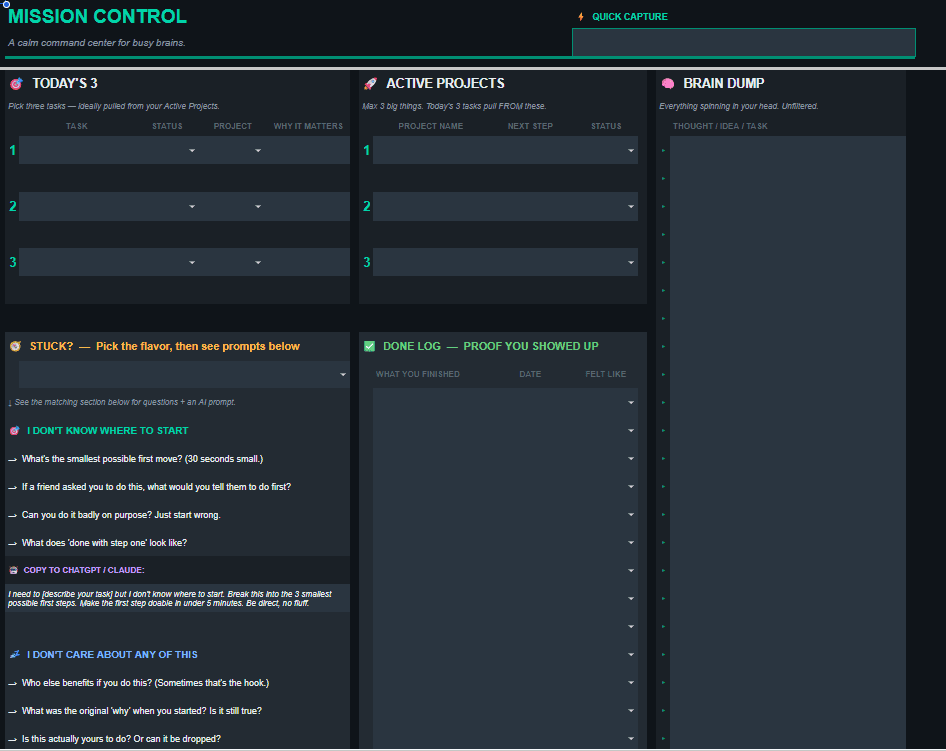
If your phone is the first thing that talks to your brain every morning, there is a good chance the rest of the day already starts tilted.
This is not just a discipline problem.
For a lot of ADHD adults, the phone-in-bed spiral is a perfect storm:
- zero friction
- instant novelty
- unlimited switching
- no obvious stopping point
- a thousand chances to forget what you meant to do next
So you wake up, check one thing, and accidentally hand your best attention to texts, news, email, reels, group chats, weather, sports, and some random thought you did not need at 6:43 AM.
Then the day feels noisy before your feet even hit the floor.
This angle keeps showing up for a reason. ADHD Reddit threads still keep circling the same question in different words: how do I get off my phone and actually start the morning? YouTube is full of ADHD morning-routine videos because this is not a weird niche problem. It is common. And broader health coverage keeps repeating the same warning too: checking your phone first thing can raise stress, delay your routine, and make it easier to start the day in reaction mode.
So let’s keep this simple.
If mornings keep disappearing into your screen, do not try to win with willpower alone. Build a better first five minutes.
Why the phone hits so hard in the morning
Morning attention is fragile.
Before you are fully oriented, your brain is looking for the easiest available lane. Your phone wins because it is already there, already stimulating, and already full of tiny unfinished loops.
With ADHD, that matters even more.
You are not opening one clean task. You are opening a casino made of micro-decisions:
- should I answer this text
- should I clear this notification
- should I check my email now
- should I look that up
- should I watch one more clip
That is executive function burn before breakfast.
And once your brain starts hopping lanes, it gets harder to recover a calm sequence like:
- get up
- drink water
- take meds
- get dressed
- look at today
That clean sequence is exactly what many ADHD mornings need.
The real problem is not the phone. It is the handoff.
The phone becomes a problem when it gets the first claim on your attention.
If the first thing you do each morning is react, then your priorities start second.
That is why so many people feel behind before they have technically even begun.
The fix is not “never use your phone.” The fix is “do not let it be the boss of the opening minute.”
A better first five minutes
Here is a simple ADHD-friendly swap.
1. Put one physical step between waking up and scrolling
Make the first move something boring and visible:
- stand up
- open the blinds
- drink water
- take meds
- wash your face
Do not make the rule complicated. Just make sure your body does one real-world action before your thumb enters the feed.
2. Decide your first check on purpose
A lot of people say “I’ll just check my phone for one second.” That is too vague.
Instead decide the category before you touch it.
Examples:
- alarm off only
- calendar only
- weather only
- one text from one person only
If you do not define the lane, the apps will define it for you.
3. Give your brain a visible target before the internet gets one
This is where mornings get easier.
Before email, before social, before random tabs, put today somewhere visible.
That can be:
- one sticky note
- a paper notebook
- a printed checklist
- one clean dashboard with today’s top priorities
Your brain does better when the day is already visible. Otherwise every app becomes a suggestion engine.
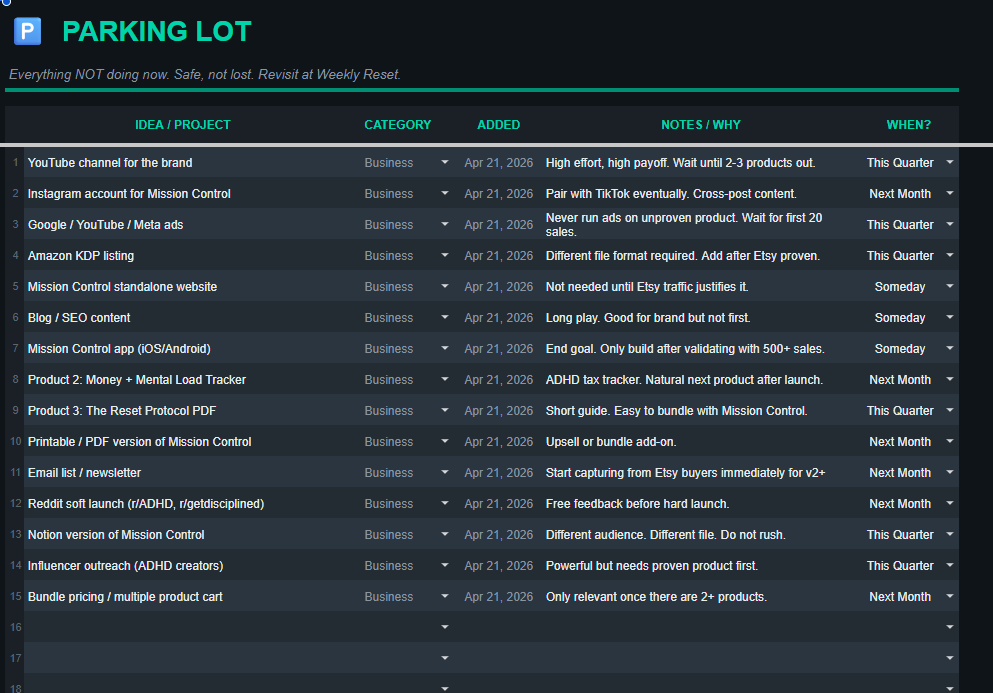
4. Use a parking lot for “not now” thoughts
Morning scrolling creates side quests fast.
You remember a bill. You think of a package. You wonder if somebody replied. You want to search one thing.
Do not trust yourself to hold all that in your head. Dump it.
A parking lot list is enough. Write down the thought and keep moving.
The goal is not to become a monk. The goal is to stop every loose thought from becoming a new tab.
5. Delay input until after output
This rule helps a lot:
produce one thing before you consume a bunch of things
That one thing can be tiny:
- make the bed
- write the top 3 for today
- start the coffee
- answer one planned email instead of reading ten random ones
- open the one document you actually need
Output creates traction. Input creates drift.
If you already blew the morning, do this
Do not turn a 20-minute phone spiral into a 3-hour guilt session.
Reset fast.
Say:
- that was drift
- I am not doing a post-mortem right now
- next step is ___
- make it small
- do it immediately
Example:
“I lost 35 minutes on my phone. Fine. Next step is meds, water, and opening today’s list.”
That is enough.
A lot of ADHD days get saved by boring recoveries, not dramatic motivation.
Build a morning that needs less self-control
This matters more than people think.
If your phone sleeps beside your pillow, if notifications are live, if your day is not visible anywhere else, and if the first task is unclear, then you built a runway for drift.
Make the environment do more work.
Good swaps:
- charge the phone across the room
- turn off non-essential notifications
- keep a written morning sequence visible
- leave today’s top tasks open and obvious
- use one place to see the day instead of five apps
The less your brain has to assemble from scratch, the better the morning usually goes.
The point is not purity
You do not need a perfect digital detox.
You need a morning where your attention belongs to you for long enough to get oriented.
That is it.
If you want a quick read on where your biggest friction point is, take the ClarityBolt quiz: https://www.claritybolt.com/quiz
And if what you really need is one visible place to run the day before your phone turns it into a scavenger hunt, this is a solid tool: https://www.etsy.com/listing/4492993377/mission-control-adhd-friendly-daily?ref=shop_home_active_1&dd=1&logging_key=b12b93453a7ccaa085484f2a615fdaebbb18ffa0%3A4492993377
Your morning does not have to be perfect.
It just needs a better first owner.
try the tool
Ready to try Mission Control?
A calm daily dashboard for Excel and Google Sheets. $24.99.